
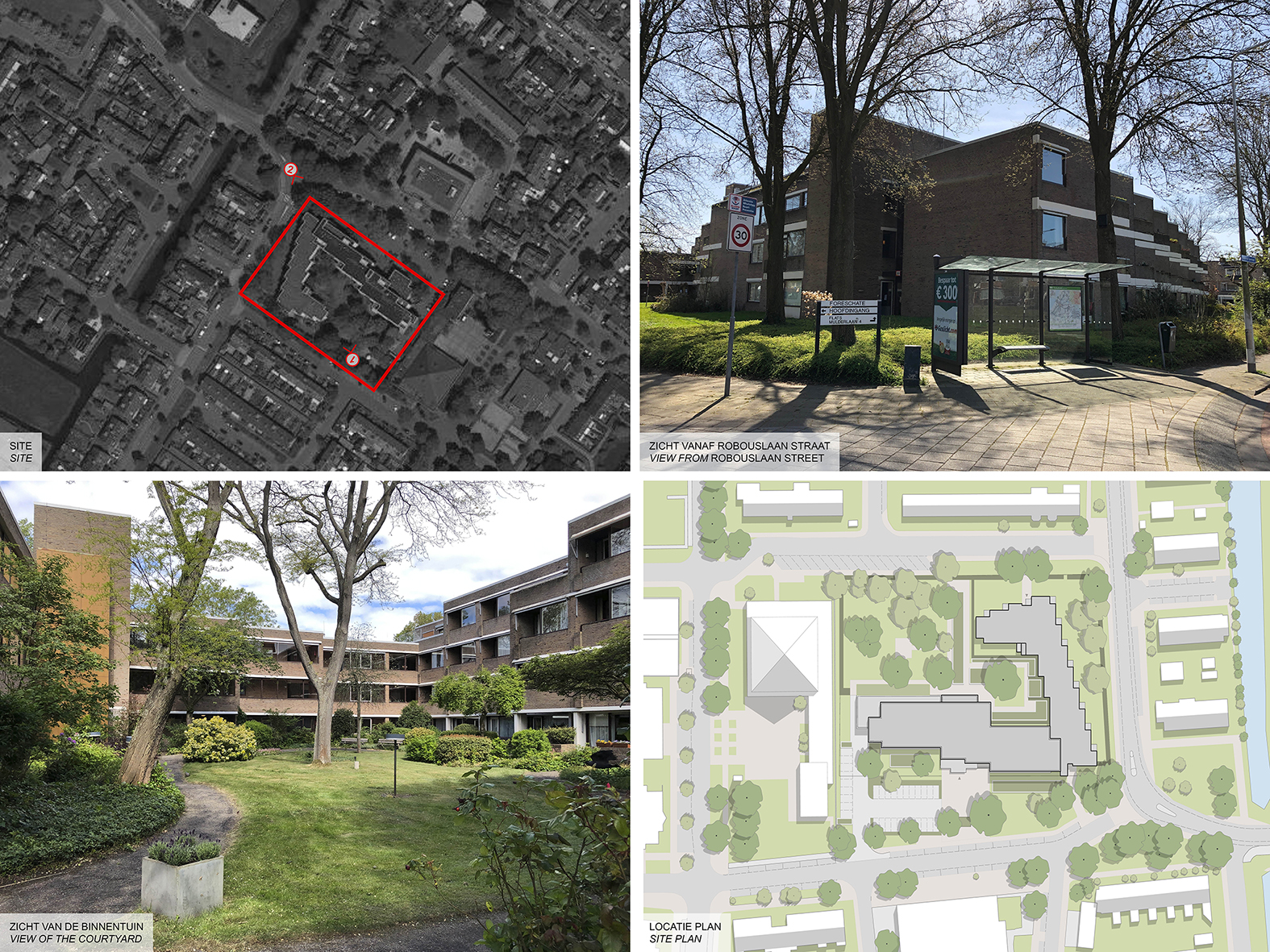
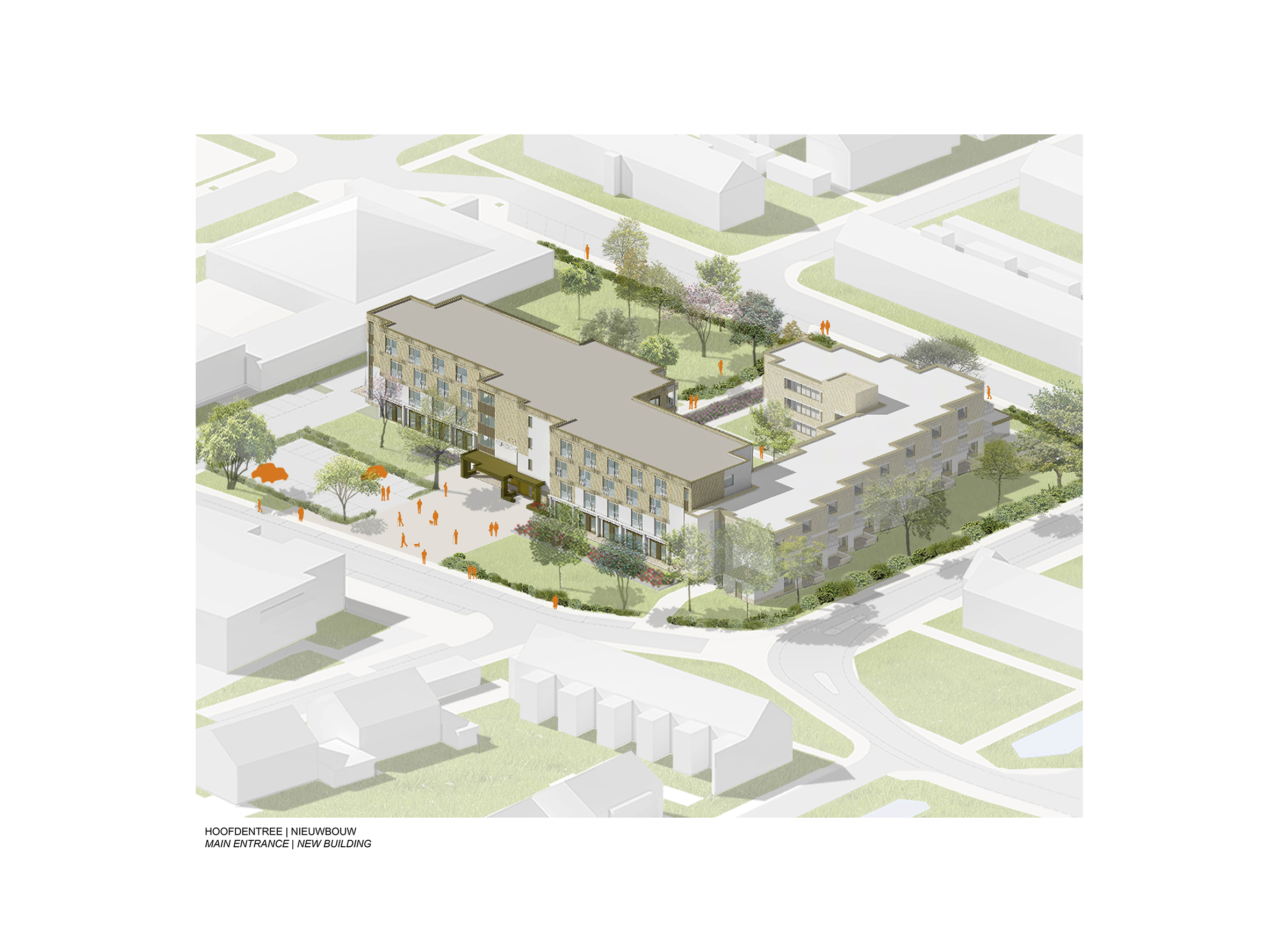
In het hart van de Bosgeest-wijk in Voorschoten staat het woonzorggebouw Foreschate, een complex uit de jaren 70 dat is gelegen in een zorgvuldig ontworpen groene omgeving. Om te kunnen voldoen aan de hedendaagse zorgbehoeften kozen Woonzorg Nederland, in samenwerking met zorgorganisatie Topaz, voor een strategie van selectieve sloop, nieuwbouw en renovatie. Het nieuwe zorggebouw is opgevat als een karakteristieke woonomgeving, waarin het gevoel van “thuis zijn” als leidend principe centraal staat.
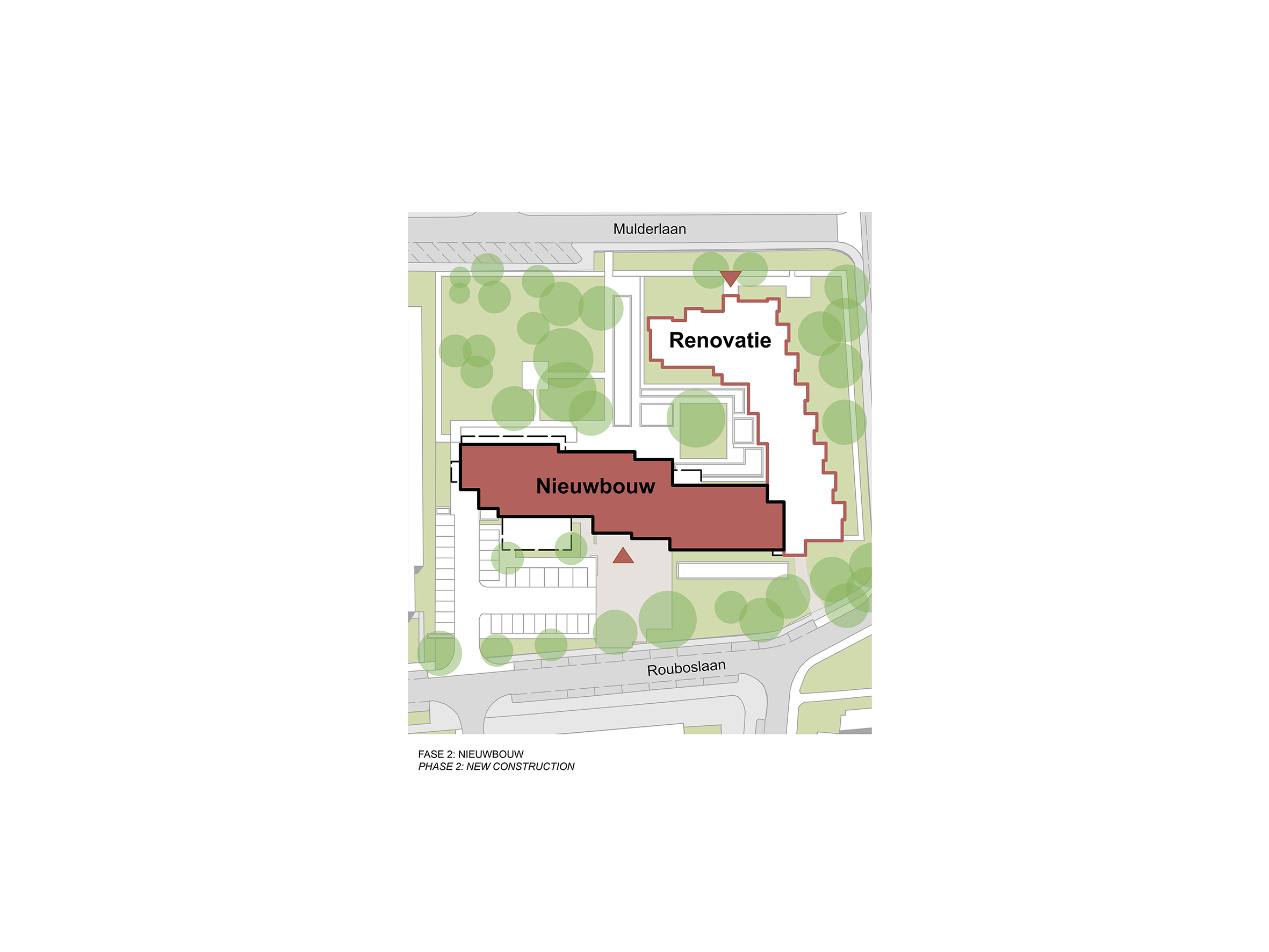
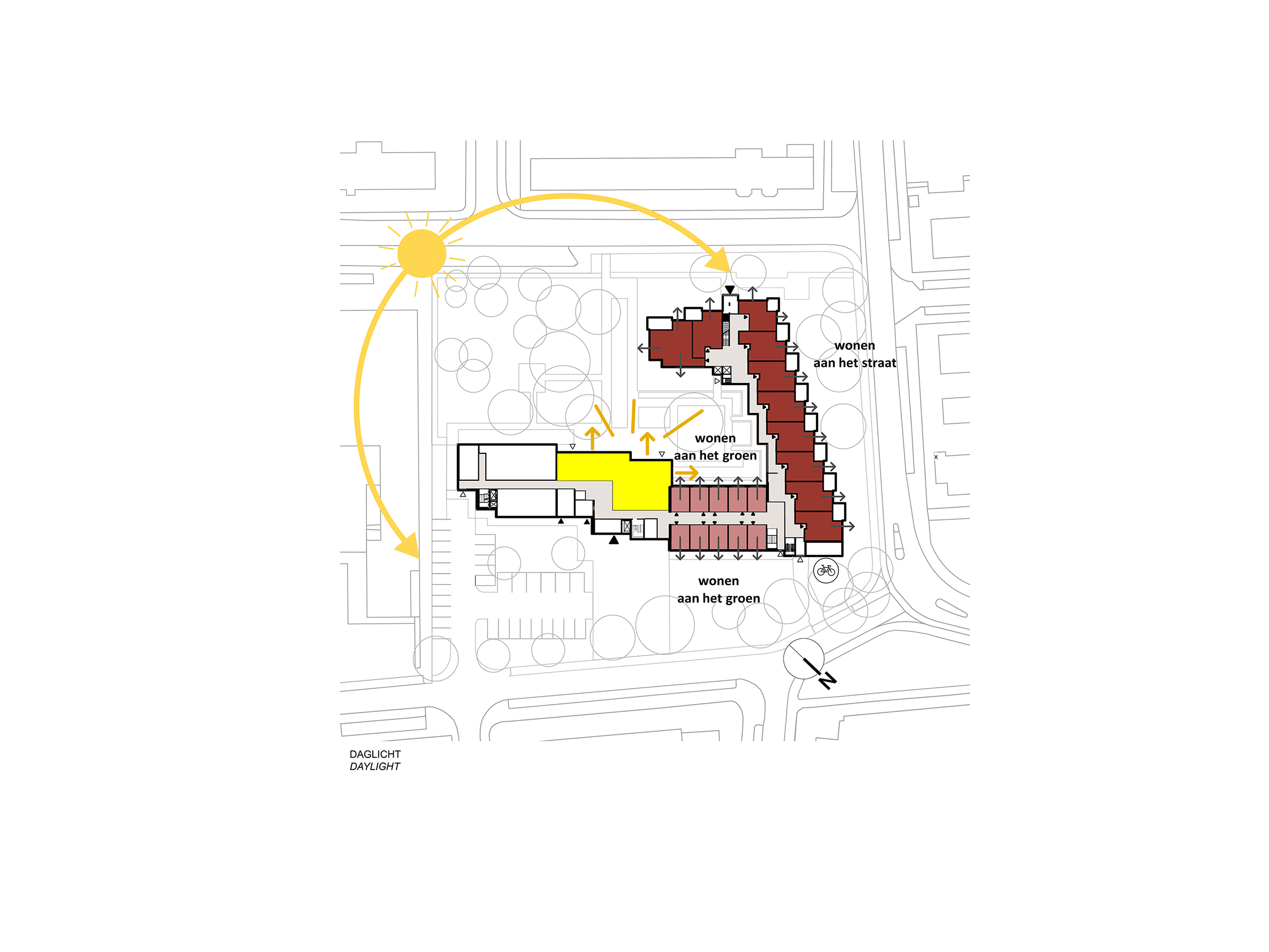
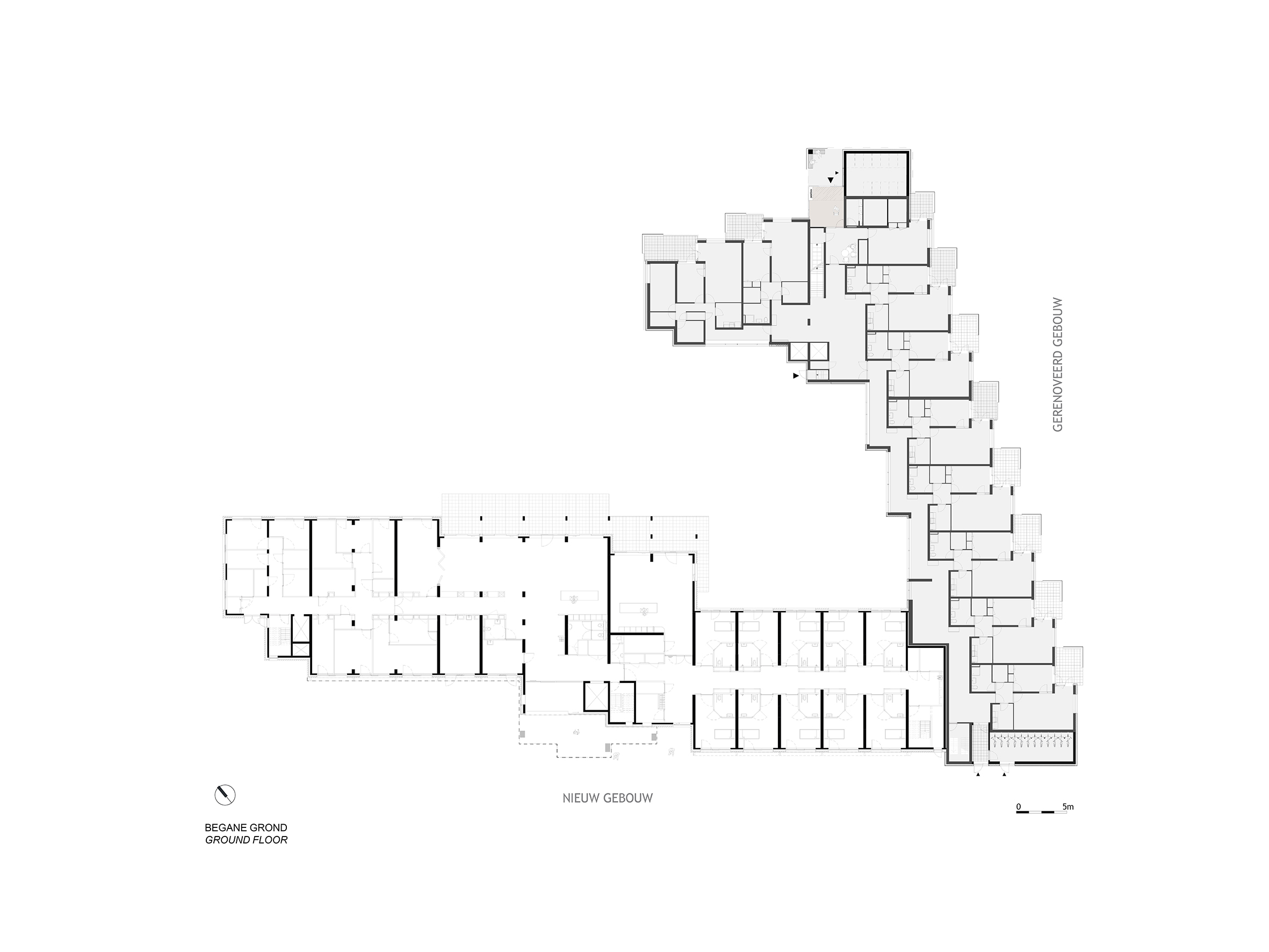
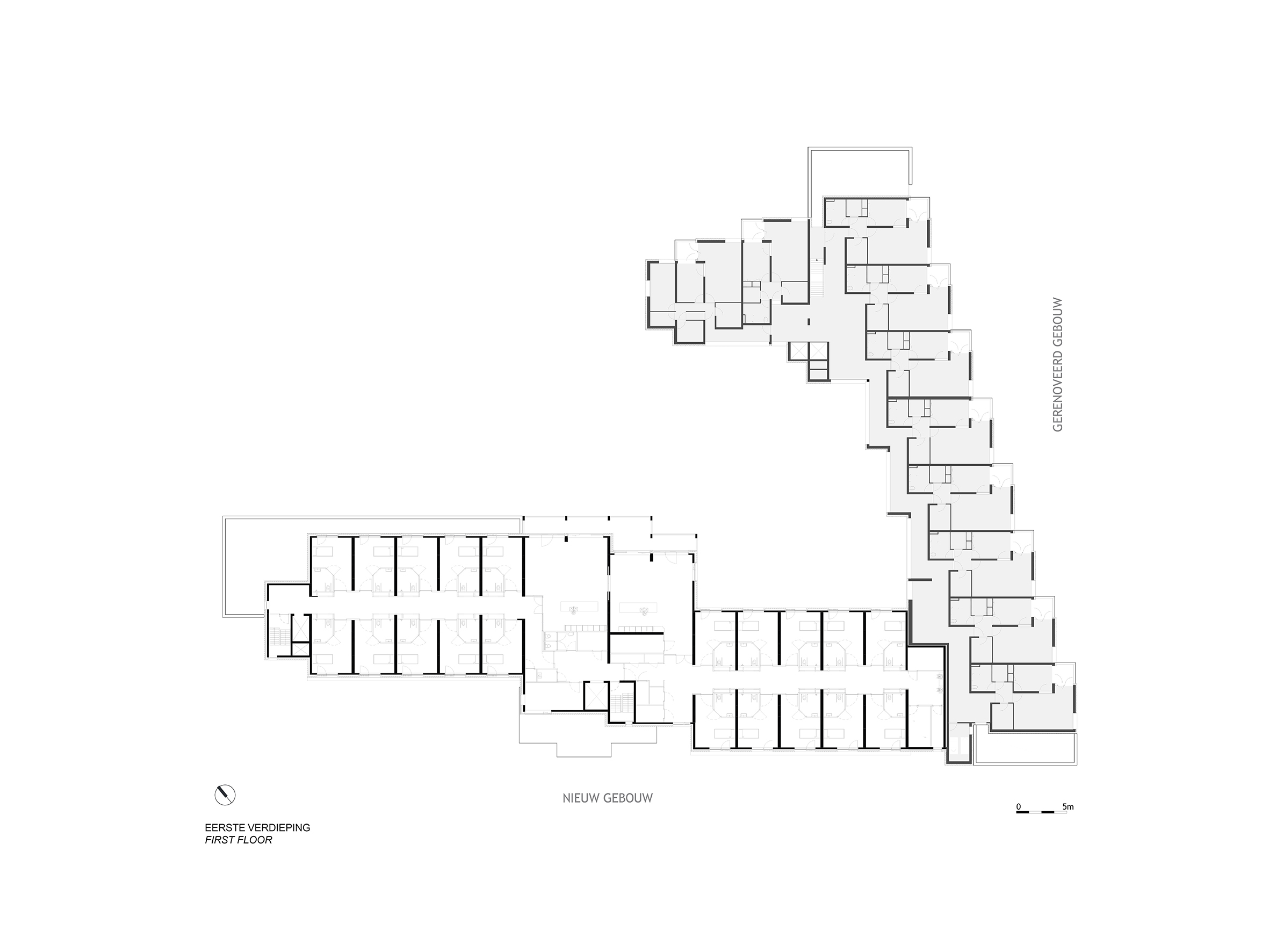
Het gereonveerde volume bestaat uit verspringende, zelfstandige eenheden (30 zorgappartementen), elk met een eigen buitenruimte: tuinen op de begane grond en balkons op de verdiepingen. Op de begane grond zijn bijzondere functies toegevoegd, zoals een nieuwe entree, een parkeerruimte voor scootmobielen en een gemeenschappelijke huiskamer.
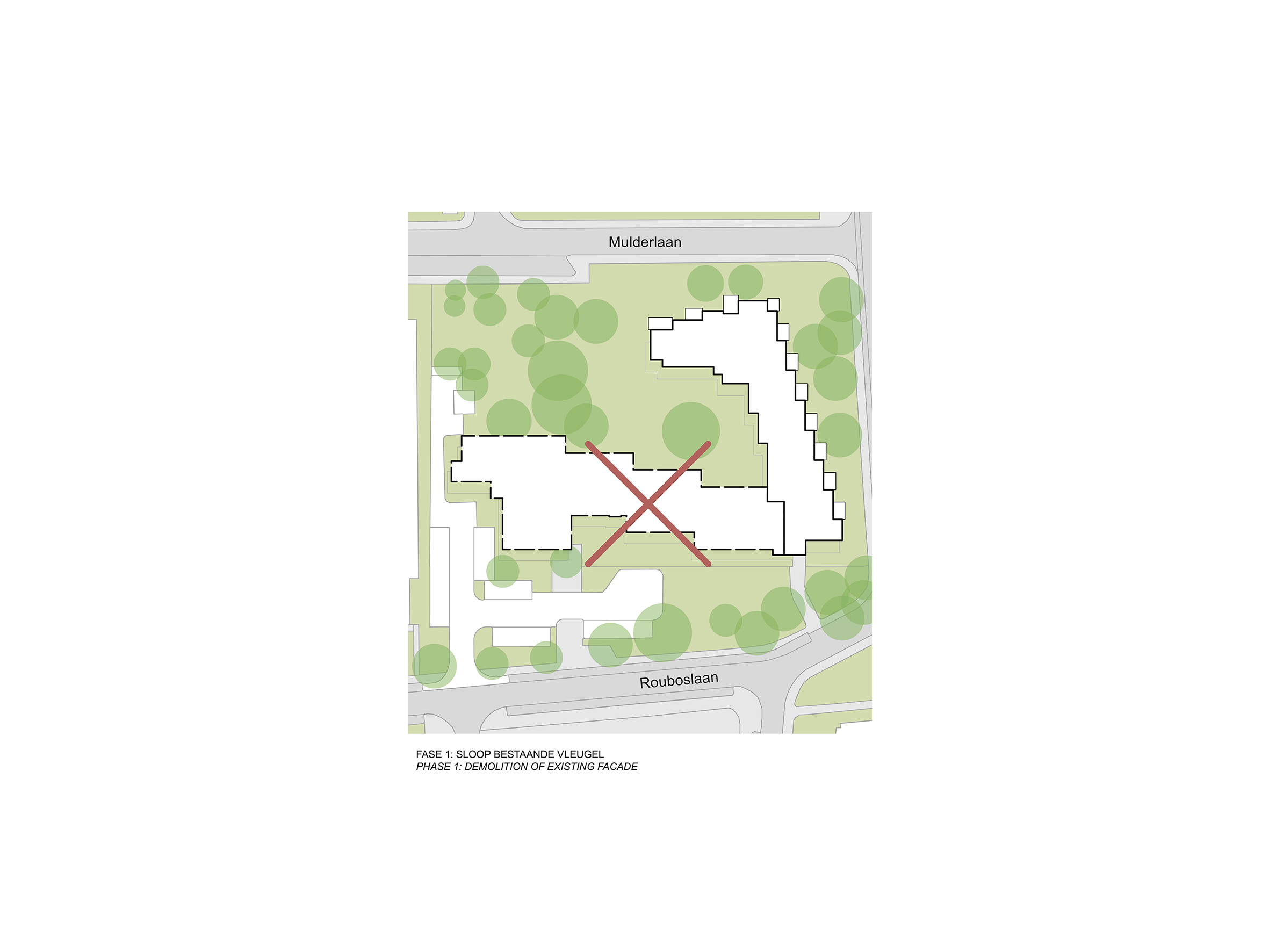
De tweede vleugel, waar eerder bewoners met zware dementie woonden, is vanwege de staat van het gebouw gesloopt en vervangen door een nieuw volume dat is afgestemd op de specifieke eisen van dementiezorg. Geïnspireerd door de aangrenzende gerenoveerde vleugel, speelt het nieuwe gebouw met subtiele ‘gestaffelde’ volumes die de individuele woongroepen duidelijk onderscheiden van de gemeenschappelijke ruimten, waardoor een natuurlijke samenhang tussen oud en nieuw ontstaat. De woongroepen zijn georganiseerd in twee kleinschalige clusters aan tegenoverliggende zijden van elke verdieping, gescheiden door deelbare gemeenschappelijke functies. De centrale voorzieningen bestaan uit twee huiskamers met sanitair en keuken, personeelsruimten en opslag. In totaal zijn er zeven woongroepen: zes verdeeld over drie verdiepingen en één op de begane grond.
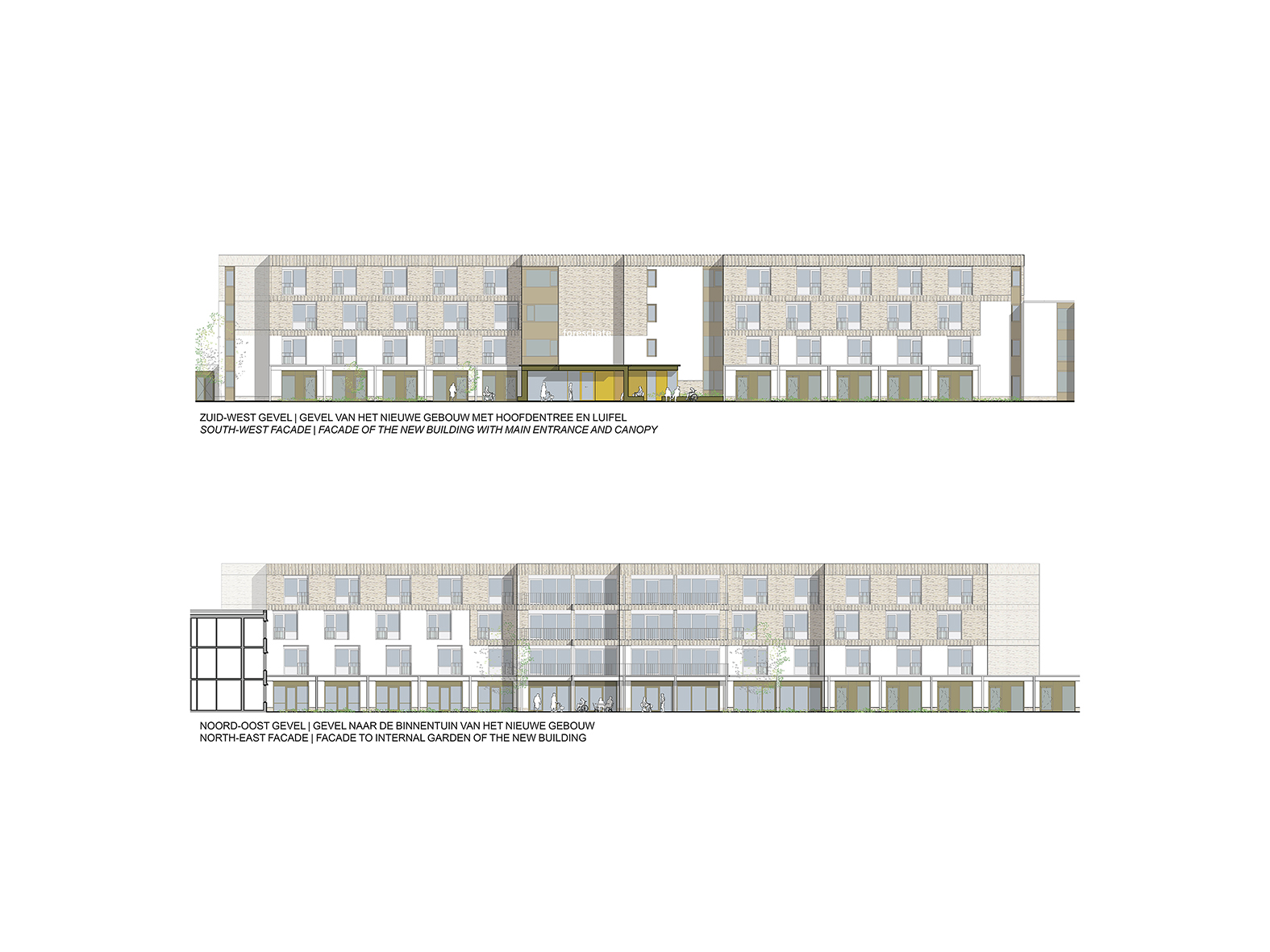
Hoewel de twee vleugels verschillende doelgroepen huisvesten, is het project ontworpen als één samenhangend architectonisch en stedenbouwkundig geheel. Deze samenhang komt tot uiting in de gevels, waar het ritme van de individuele woon-slaapkamers zichtbaar zijn, terwijl de collectieve identiteit wordt versterkt door een rustige, tactiele baksteenarchitectuur die zich voegt naar het karakter van de wijk.
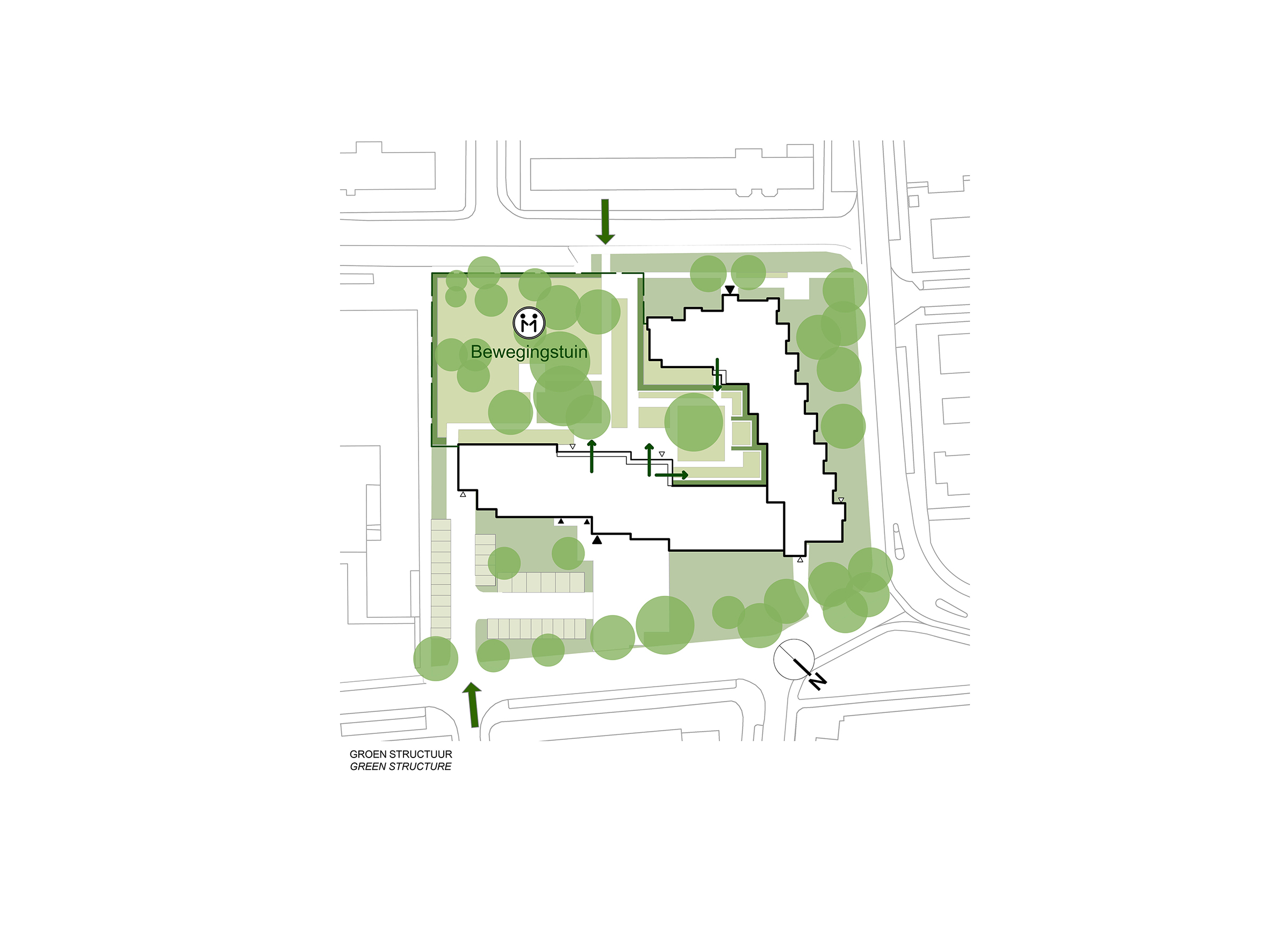
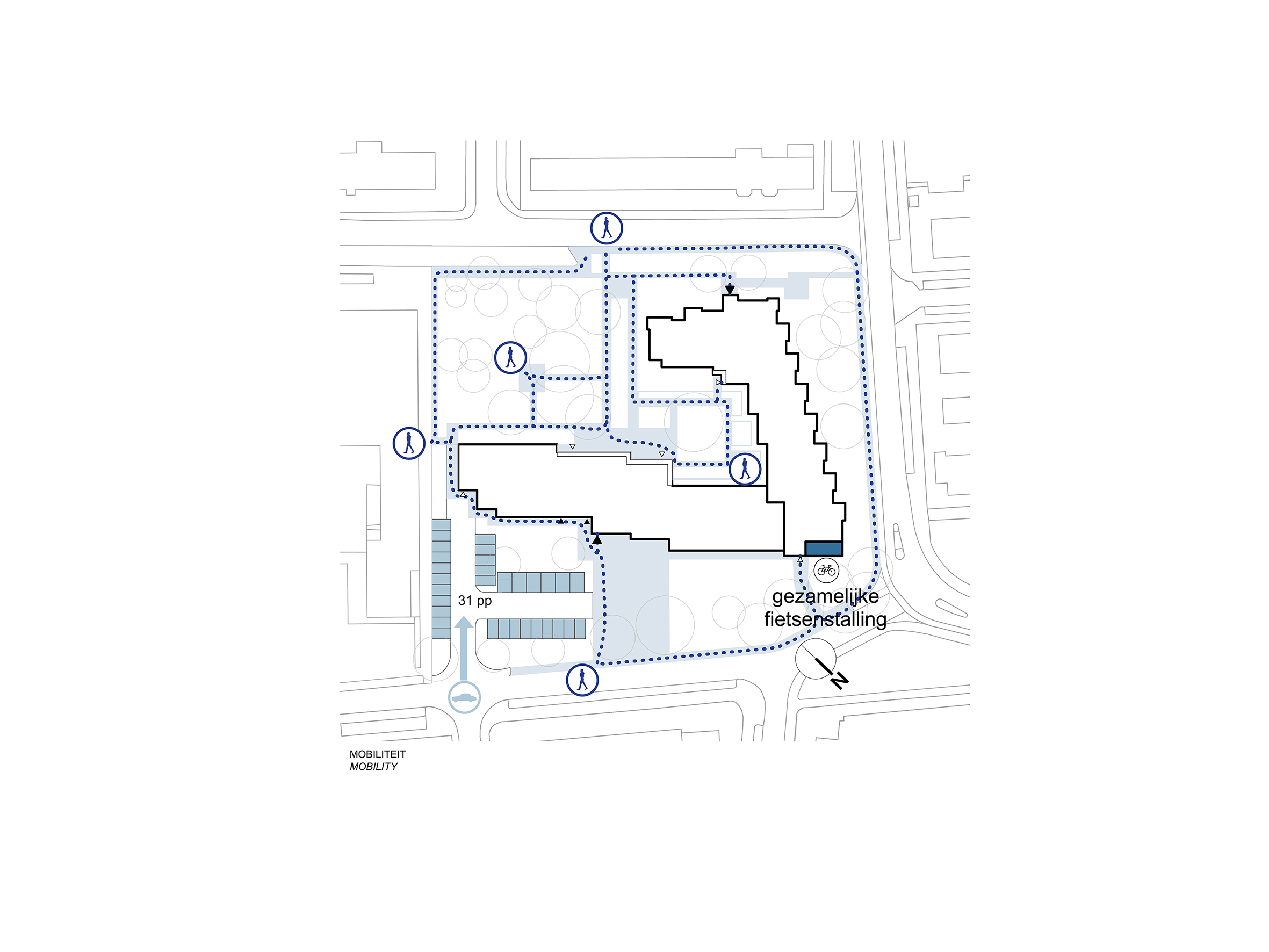
De plint wordt geaccentueerd door betonnen kaderdetails, verwijzend naar de vormentaal van het oorspronkelijke gebouw uit de jaren 70. Een markante luifel benadrukt de nieuwe entree en vormt een gastvrije overgang, ondersteund door een heringericht publiek landschap. De tuin is opnieuw ontworpen als een toegankelijke, gedeelde buitenruimte—open voor bewoners en buurtbezoekers—met paden, beplantingsvlakken en plekken voor ontmoeting en spel.
Het gehele complex is ontworpen met toekomstige aanpasbaarheid in gedachten: Constructieve openingen zijn voorbereid in de dragende in het werk gestorte wanden en gevelcompositie, raamafmetingen en de voorzieningen zijn vanaf het begin constructief geïntegreerd, zodat toekomstige transformaties zonder kwaliteitsverlies kunnen plaatsvinden.
Status: Opgeleverd 2024
Team: Evelien van Veen, Robby Smith, Martina Stenta, Giulia D’Addario, Joe Gibbs, Floor van de Lustgraaf
Opdrachtgever: Woonzorg Nederland
Locatie: Voorschoten
Programma: 70 studio’s voor ouderen met dementie en 30 zelfstandige woningen voor ouderen
Fotograaf: Luuk Kramer


In het hart van de Bosgeest-wijk in Voorschoten staat het woonzorggebouw Foreschate, een complex uit de jaren 70 dat is gelegen in een zorgvuldig ontworpen groene omgeving. Om te kunnen voldoen aan de hedendaagse zorgbehoeften kozen Woonzorg Nederland, in samenwerking met zorgorganisatie Topaz, voor een strategie van selectieve sloop, nieuwbouw en renovatie. Het nieuwe zorggebouw is opgevat als een karakteristieke woonomgeving, waarin het gevoel van “thuis zijn” als leidend principe centraal staat.
Het gereonveerde volume bestaat uit verspringende, zelfstandige eenheden (30 zorgappartementen), elk met een eigen buitenruimte: tuinen op de begane grond en balkons op de verdiepingen. Op de begane grond zijn bijzondere functies toegevoegd, zoals een nieuwe entree, een parkeerruimte voor scootmobielen en een gemeenschappelijke huiskamer.
De tweede vleugel, waar eerder bewoners met zware dementie woonden, is vanwege de staat van het gebouw gesloopt en vervangen door een nieuw volume dat is afgestemd op de specifieke eisen van dementiezorg. Geïnspireerd door de aangrenzende gerenoveerde vleugel, speelt het nieuwe gebouw met subtiele ‘gestaffelde’ volumes die de individuele woongroepen duidelijk onderscheiden van de gemeenschappelijke ruimten, waardoor een natuurlijke samenhang tussen oud en nieuw ontstaat. De woongroepen zijn georganiseerd in twee kleinschalige clusters aan tegenoverliggende zijden van elke verdieping, gescheiden door deelbare gemeenschappelijke functies. De centrale voorzieningen bestaan uit twee huiskamers met sanitair en keuken, personeelsruimten en opslag. In totaal zijn er zeven woongroepen: zes verdeeld over drie verdiepingen en één op de begane grond.
Hoewel de twee vleugels verschillende doelgroepen huisvesten, is het project ontworpen als één samenhangend architectonisch en stedenbouwkundig geheel. Deze samenhang komt tot uiting in de gevels, waar het ritme van de individuele woon-slaapkamers zichtbaar zijn, terwijl de collectieve identiteit wordt versterkt door een rustige, tactiele baksteenarchitectuur die zich voegt naar het karakter van de wijk.
De plint wordt geaccentueerd door betonnen kaderdetails, verwijzend naar de vormentaal van het oorspronkelijke gebouw uit de jaren 70. Een markante luifel benadrukt de nieuwe entree en vormt een gastvrije overgang, ondersteund door een heringericht publiek landschap. De tuin is opnieuw ontworpen als een toegankelijke, gedeelde buitenruimte—open voor bewoners en buurtbezoekers—met paden, beplantingsvlakken en plekken voor ontmoeting en spel.
Het gehele complex is ontworpen met toekomstige aanpasbaarheid in gedachten: Constructieve openingen zijn voorbereid in de dragende in het werk gestorte wanden en gevelcompositie, raamafmetingen en de voorzieningen zijn vanaf het begin constructief geïntegreerd, zodat toekomstige transformaties zonder kwaliteitsverlies kunnen plaatsvinden.
Status: Opgeleverd 2024
Team: Evelien van Veen, Robby Smith, Martina Stenta, Giulia D’Addario, Joe Gibbs, Floor van de Lustgraaf
Opdrachtgever: Woonzorg Nederland
Locatie: Voorschoten
Programma: 70 studio’s voor ouderen met dementie en 30 zelfstandige woningen voor ouderen
Fotograaf: Luuk Kramer
In het hart van de Bosgeest-wijk in Voorschoten staat het woonzorggebouw Foreschate, een complex uit de jaren 70 dat is gelegen in een zorgvuldig ontworpen groene omgeving. Om te kunnen voldoen aan de hedendaagse zorgbehoeften kozen Woonzorg Nederland, in samenwerking met zorgorganisatie Topaz, voor een strategie van selectieve sloop, nieuwbouw en renovatie. Het nieuwe zorggebouw is opgevat als een karakteristieke woonomgeving, waarin het gevoel van “thuis zijn” als leidend principe centraal staat.
Het gereonveerde volume bestaat uit verspringende, zelfstandige eenheden (30 zorgappartementen), elk met een eigen buitenruimte: tuinen op de begane grond en balkons op de verdiepingen. Op de begane grond zijn bijzondere functies toegevoegd, zoals een nieuwe entree, een parkeerruimte voor scootmobielen en een gemeenschappelijke huiskamer.
De tweede vleugel, waar eerder bewoners met zware dementie woonden, is vanwege de staat van het gebouw gesloopt en vervangen door een nieuw volume dat is afgestemd op de specifieke eisen van dementiezorg. Geïnspireerd door de aangrenzende gerenoveerde vleugel, speelt het nieuwe gebouw met subtiele ‘gestaffelde’ volumes die de individuele woongroepen duidelijk onderscheiden van de gemeenschappelijke ruimten, waardoor een natuurlijke samenhang tussen oud en nieuw ontstaat. De woongroepen zijn georganiseerd in twee kleinschalige clusters aan tegenoverliggende zijden van elke verdieping, gescheiden door deelbare gemeenschappelijke functies. De centrale voorzieningen bestaan uit twee huiskamers met sanitair en keuken, personeelsruimten en opslag. In totaal zijn er zeven woongroepen: zes verdeeld over drie verdiepingen en één op de begane grond.
Hoewel de twee vleugels verschillende doelgroepen huisvesten, is het project ontworpen als één samenhangend architectonisch en stedenbouwkundig geheel. Deze samenhang komt tot uiting in de gevels, waar het ritme van de individuele woon-slaapkamers zichtbaar zijn, terwijl de collectieve identiteit wordt versterkt door een rustige, tactiele baksteenarchitectuur die zich voegt naar het karakter van de wijk.
De plint wordt geaccentueerd door betonnen kaderdetails, verwijzend naar de vormentaal van het oorspronkelijke gebouw uit de jaren 70. Een markante luifel benadrukt de nieuwe entree en vormt een gastvrije overgang, ondersteund door een heringericht publiek landschap. De tuin is opnieuw ontworpen als een toegankelijke, gedeelde buitenruimte—open voor bewoners en buurtbezoekers—met paden, beplantingsvlakken en plekken voor ontmoeting en spel.
Het gehele complex is ontworpen met toekomstige aanpasbaarheid in gedachten: Constructieve openingen zijn voorbereid in de dragende in het werk gestorte wanden en gevelcompositie, raamafmetingen en de voorzieningen zijn vanaf het begin constructief geïntegreerd, zodat toekomstige transformaties zonder kwaliteitsverlies kunnen plaatsvinden.
Status: Opgeleverd 2024
Team: Evelien van Veen, Robby Smith, Martina Stenta, Giulia D’Addario, Joe Gibbs, Floor van de Lustgraaf
Opdrachtgever: Woonzorg Nederland
Locatie: Voorschoten
Programma: 70 studio’s voor ouderen met dementie en 30 zelfstandige woningen voor ouderen
Fotograaf: Luuk Kramer