Stories | Collective Living
Collective Living
Social sustainability starts with the typology of the building
Are we also building communities?
We are building more and more homes. But are we also building communities? In the Netherlands, almost half of all adults feel lonely to some degree. About one in ten people feel severely lonely. Among young people the figures are even higher, and loneliness is also above average among older adults. At the same time, more than forty percent of households consist of one person. Living alone is becoming more normal, while social connectedness is becoming less self-evident. International studies show that social isolation is not only a social problem, but also a health risk. Strong social connections are associated with a longer life expectancy and better mental health. Their absence increases stress, vulnerability and the need for care. Living alone is not the problem. But it makes encounter less self-evident. Where the family once provided an internal network, the building must now more often provide space for chance meetings, recognition and informal social interaction. Social sustainability therefore becomes a spatial challenge.
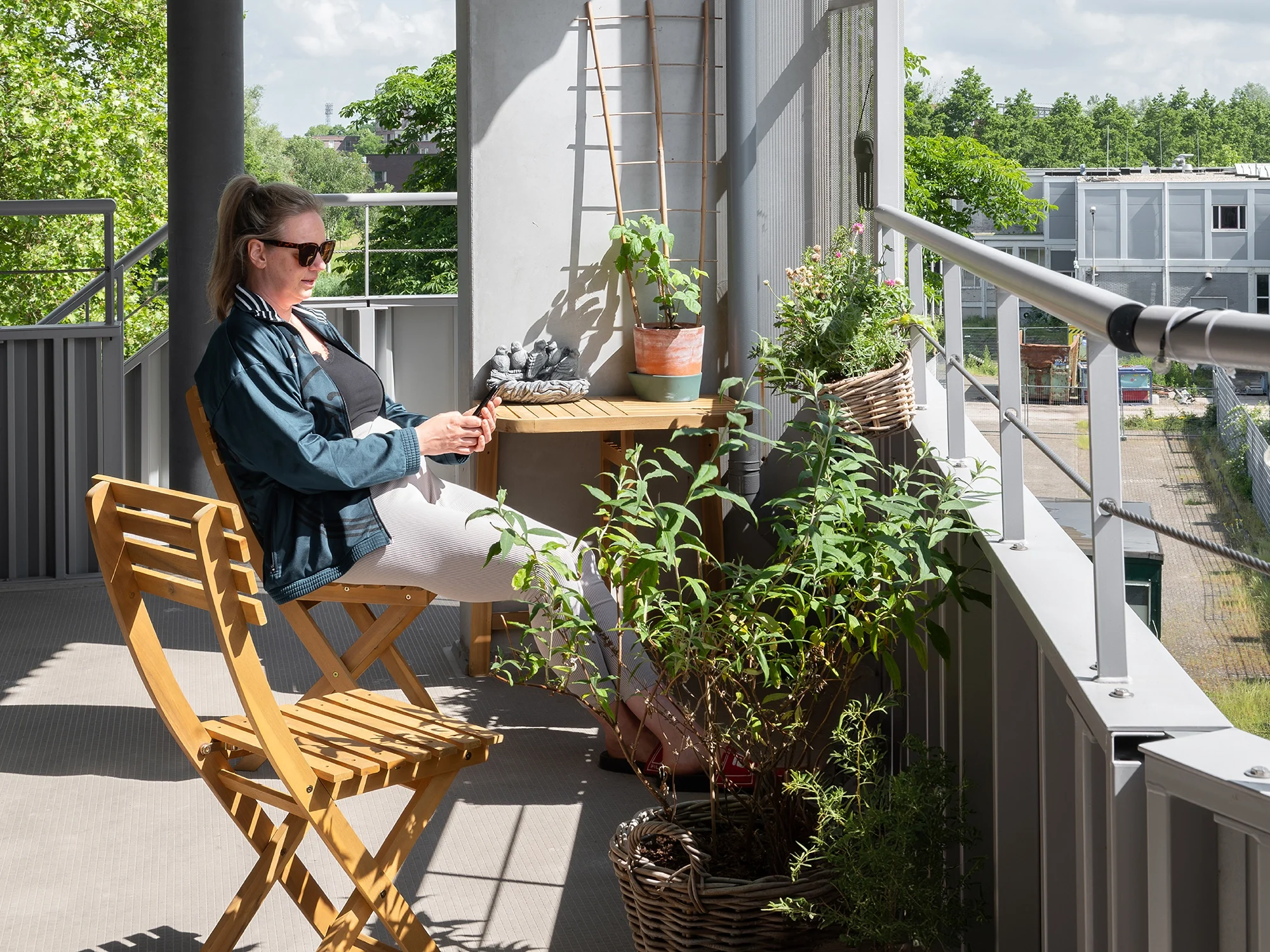
On the shared balcony @ KOP Havenkwartier
Different people, different needs
Not everyone lives in the same way, and not everyone has the same needs. A starter looks for affordability and connection with like-minded people. A family looks for space, safety and proximity to schools and play areas. A senior looks for accessibility, overview and the reassurance that someone is nearby. Someone with a care need looks for support that does not replace independence but strengthens it.
This diversity calls for tailor-made solutions. Not one universal housing model, but a considered palette of typologies that matches who lives there and how people want to live together. We have translated this into a diagram that maps the relationship between target groups, housing forms and the activities and facilities that go with them.
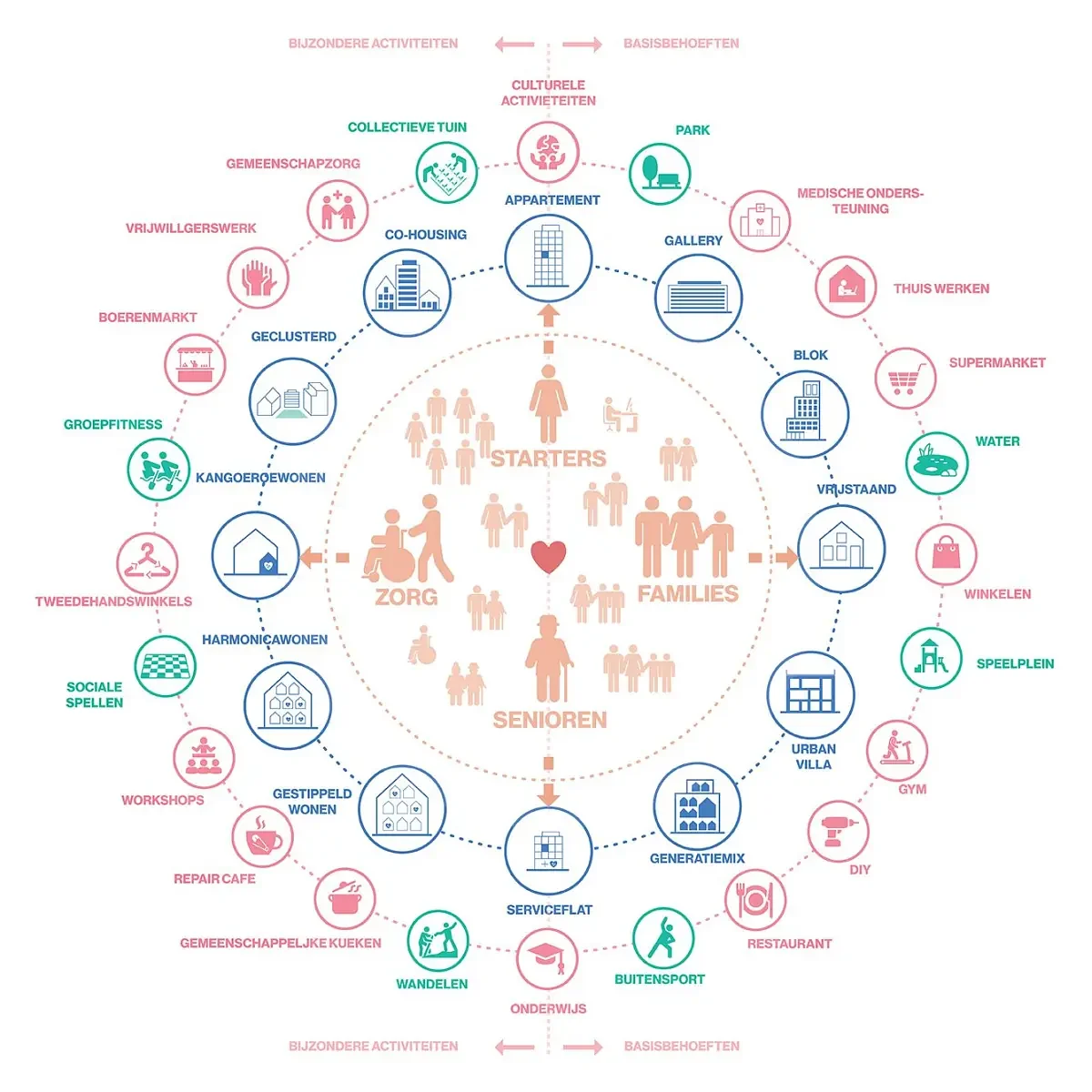
Building communities @ Woonwerk
The diagram shows four central target groups: starters, families, seniors and people with a care need. Around them a ring of housing forms, from apartments and co-housing to kangaroo housing, scattered housing and the generation mix. The outer ring connects those housing forms with the activities and facilities that make a living environment complete, from basic needs such as a supermarket or medical support to special activities such as a repair café, a farmers market or a shared kitchen. The diagram is not a catalogue. It is a framework for thinking: it shows that collective living is not a uniform concept, but a system of choices that must be tailored to who lives there and what a place needs.
The power of everyday encounter
Research into multi-family housing shows that it is precisely small, daily encounters that are crucial for the development of a sense of belonging. It is not the large communal halls that make the difference, but repeated, informal contacts in corridors, at the entrance, in the bicycle storage.
The corridor, the gallery and the entrance are not leftover spaces. They are social infrastructure. And the good news is: those who want to build affordably do not need to set aside extra budget for this. The key lies in things that need to be made anyway, but that are executed just a little better.
An entrance has to be there anyway. But a generous entrance with a bench invites a short stay. You are not just waiting for the lift. You run into someone. A gallery has to be there anyway. But a gallery that is laid out just a little wider creates room for a small vegetable planter or a chair without disrupting circulation. That small act of appropriation creates recognizability and a sense of ownership. A bicycle storage has to be there anyway. But a bicycle storage with natural light, a little extra space and a corner to pump up tires or clean a bicycle becomes a daily meeting place instead of a dark passageway. A communal courtyard has to be there anyway. But a courtyard that is visible and accessible from the homes and that is designed as the collective heart of the ensemble rather than as leftover space changes the social dynamic of the entire building. A home whose kitchen faces the gallery encourages informality. Visual contact makes a greeting natural. When homes are accessed via a corridor, daylight in the corridor is essential. A dark corridor reinforces anonymity and social distance. A corridor with natural light and sightlines increases social safety and makes lingering possible.
These are not spectacular interventions. They are subtle shifts in scale, routing and organization that make the difference between a building that isolates people and one that connects them, without significantly increasing construction costs.
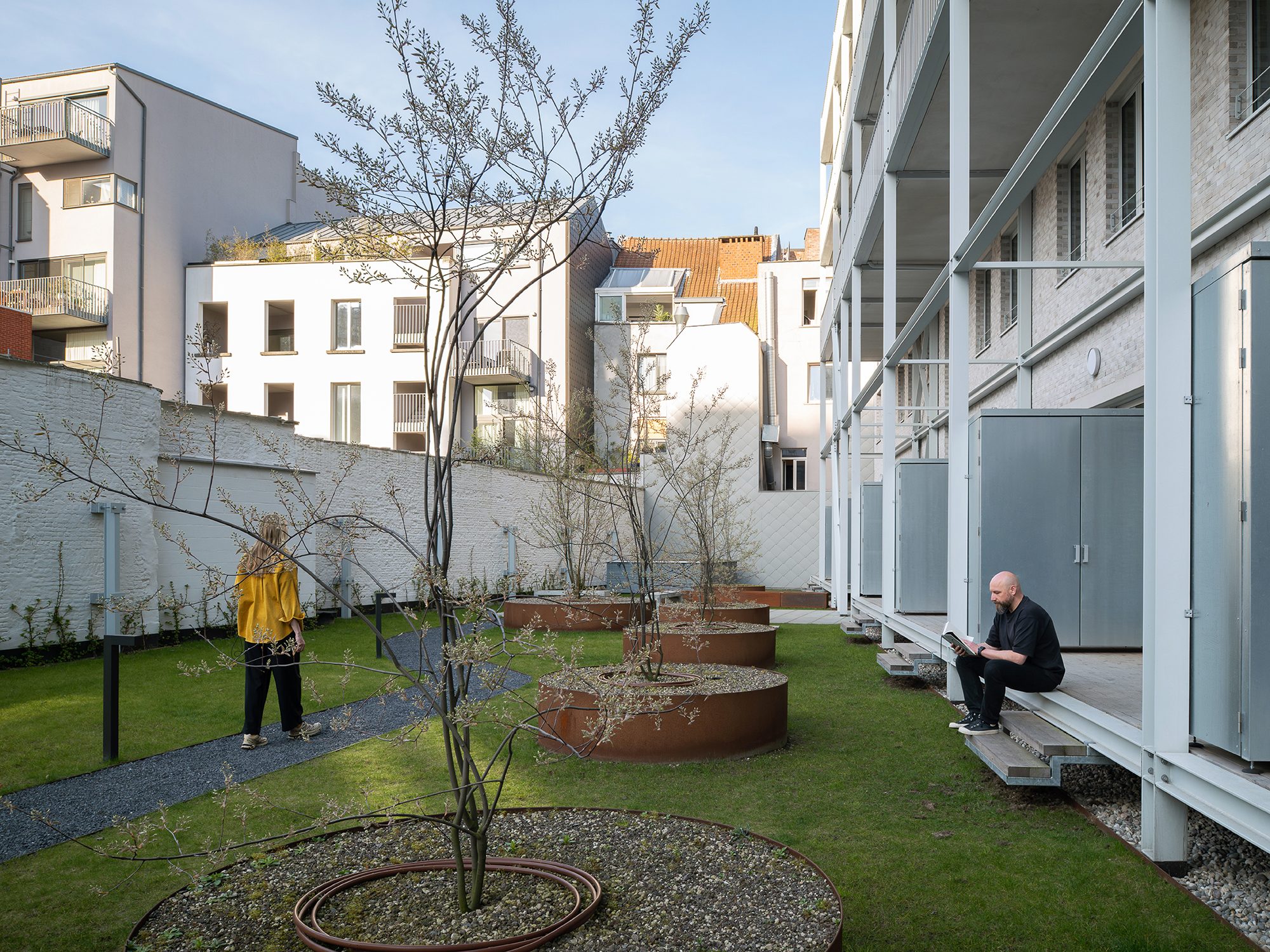
The back shared garden @ Oudemansstraat
Tailor-made solutions per target group
The choice of a housing form is not neutral. It helps determine who lives there, how people live together and what social dynamics emerge. That is why tailor-made solutions are not a luxury but a necessity.
For starters, tailor-made means compact, affordable homes with shared facilities that lower the threshold to independent living while making connection with others possible. Co-housing and apartments with shared workspaces or roof terraces match their needs. For families, tailor-made means space for children, safe outdoor areas and proximity to schools and playgrounds. The urban villa or the generation mix offer typologies in which family life and collectivity reinforce each other. A playground or a collective garden is not an additional facility but a structuring choice in the design. For seniors, tailor-made means accessibility, legibility and the reassurance of proximity without loss of autonomy. Scattered housing, kangaroo housing and clustered housing forms offer a spectrum of possibilities, in which the transition between independent and supported living can take place gradually and with dignity. Walking, a farmers market or group fitness within walking distance are not details but health strategies. For people with a care need, tailor-made means an environment that provides support without becoming institutional. Accordion housing and service flats can, if well designed, be places where care and community come together.
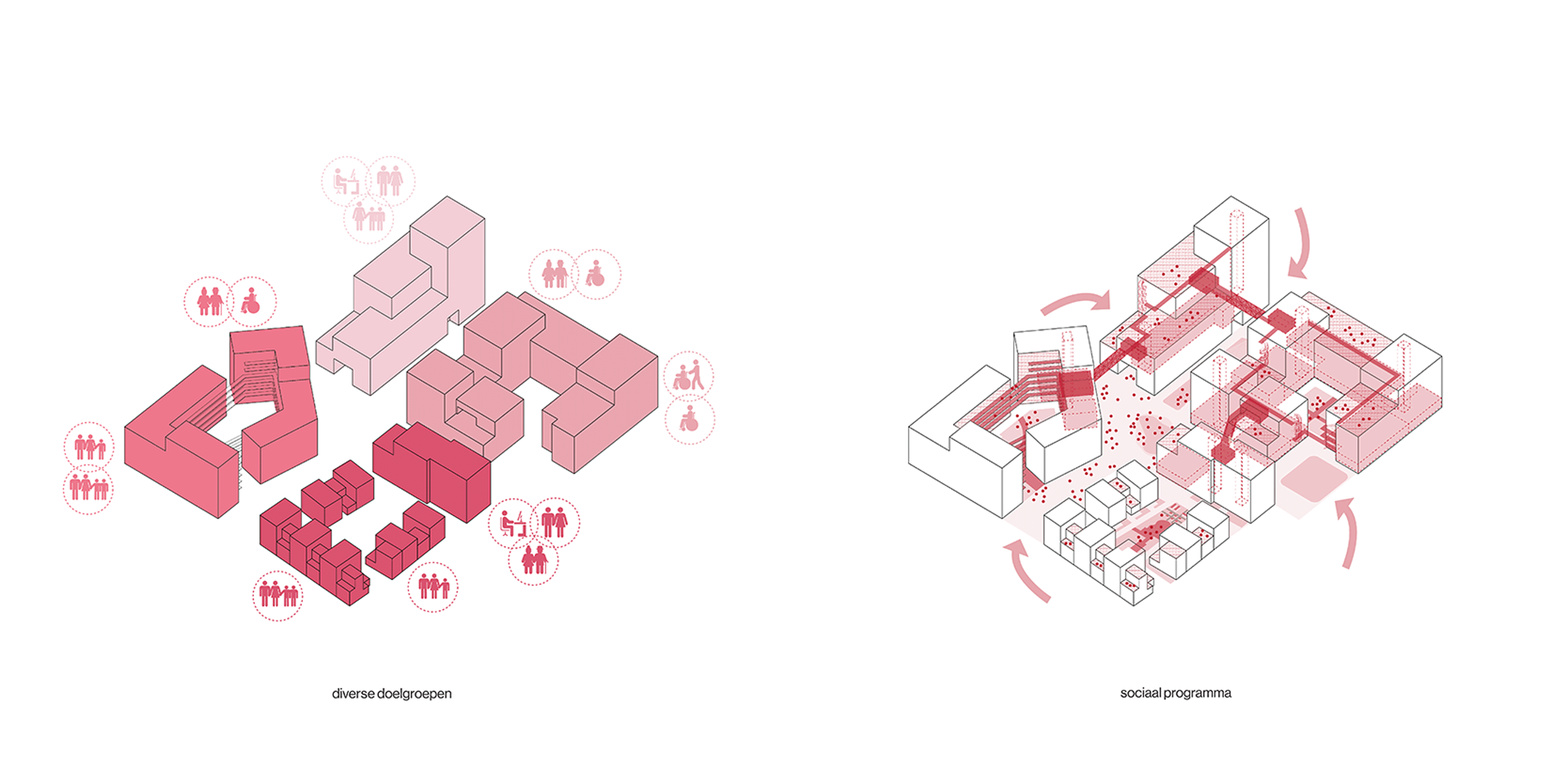
Target groups and social cohesion @ Living-Inn Winkelsteeg
Privacy as a precondition for collectivity
Collectivity only works when privacy is strongly organized. One cannot exist without the other. Especially at a time when many people live alone, the home is a safe base. The ability to withdraw, to close the door and to be invisible is essential. Without that foundation, collectivity becomes compulsory rather than voluntary.
We therefore see collective living as a carefully constructed layering of spaces. The home itself is fully private. The transitional space, the gallery, the porch and the entrance, is collective. The shared space, the communal courtyard or the roof terrace, is often also publicly accessible. When these transitions are clear and spatially legible, a sense of control emerges. Residents can choose between the bustle of the collective and the quiet of their own home. Between being visible and withdrawing. It is precisely that freedom of choice that increases the likelihood that collective spaces will actually be used. Collectivity without privacy feels like exposure. Privacy without collectivity leads to isolation. Social sustainability lies in the balance.
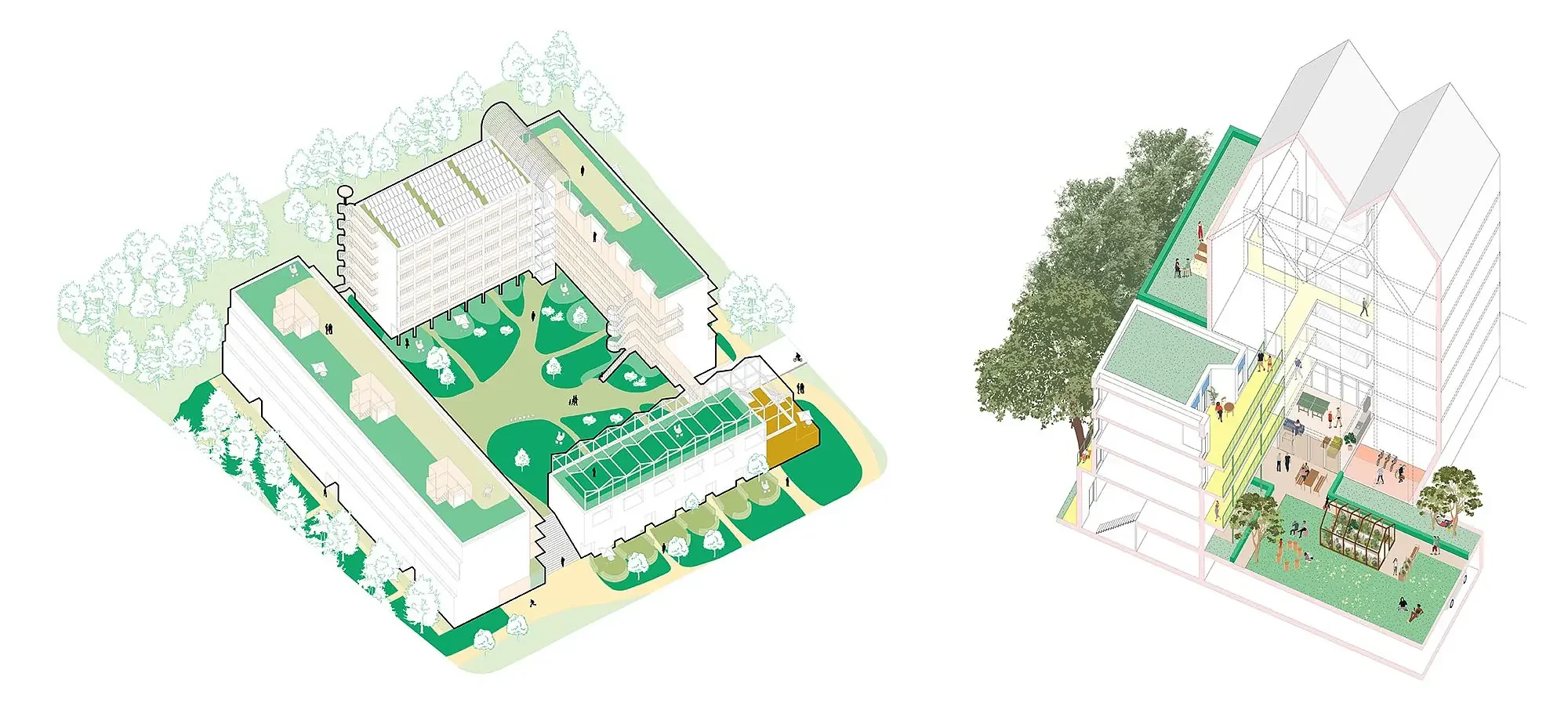
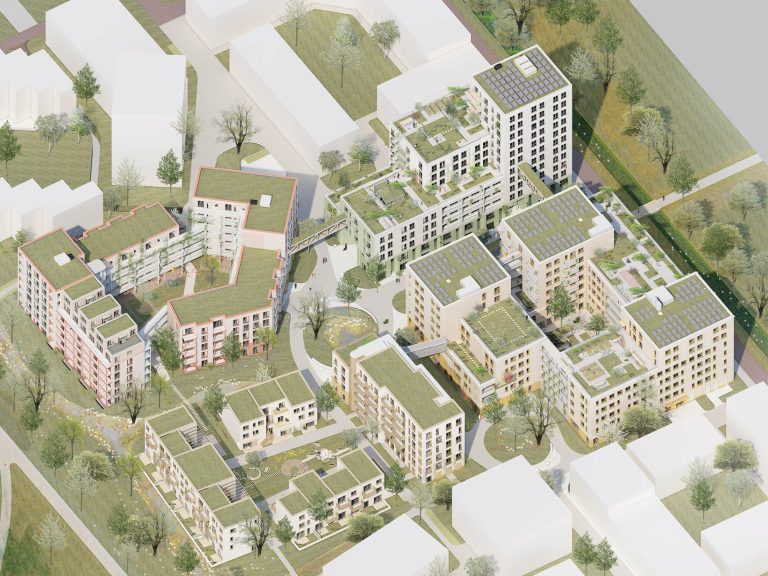
Contemporary typologies @ Zwolle
The building as a social system
When one in five Dutch people lives alone and a large part of the population feels lonely, the meaning of housing construction changes fundamentally. The building becomes more than a stacking of homes. It becomes a social system.
That system requires a deliberate choice of the right target group, the right typology and the right mix of facilities and activities. Not one solution for everyone, but a carefully tailored response to who lives there and what a place needs. Collective living does not mean living together in one household. It means living together in one building.
The home remains private. The building becomes social. The environment becomes connective.
Social sustainability is not an addition to the program. It is a design challenge. And perhaps it is precisely in that subtle balance between privacy and encounter, between the individual and the shared, that architecture reveals its greatest social value. Social sustainability starts with the typology of the building.
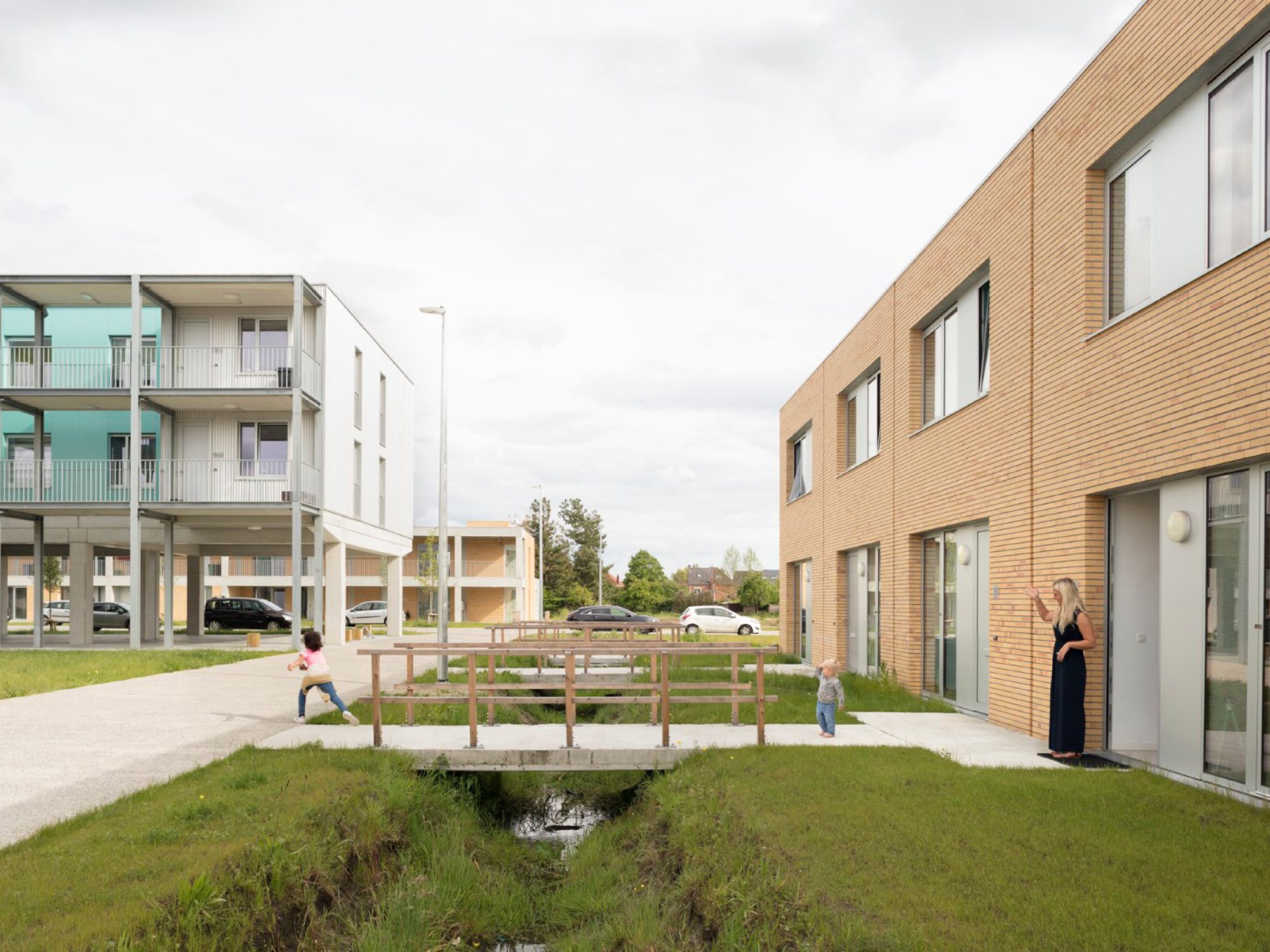
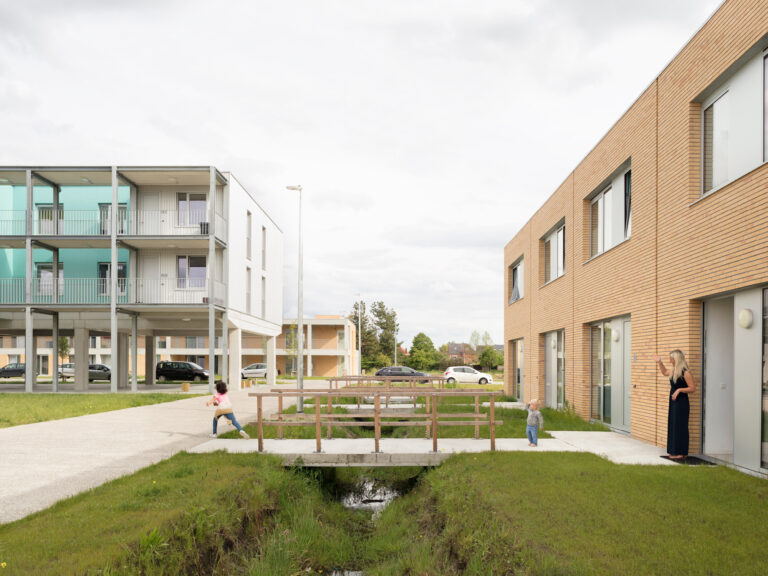
Open public space @ Ter Heide